Robert,
I have asked permission for you to use these images from the owners. They just ask for acknowledgement. You are welcome to contact them directly if you need more information.
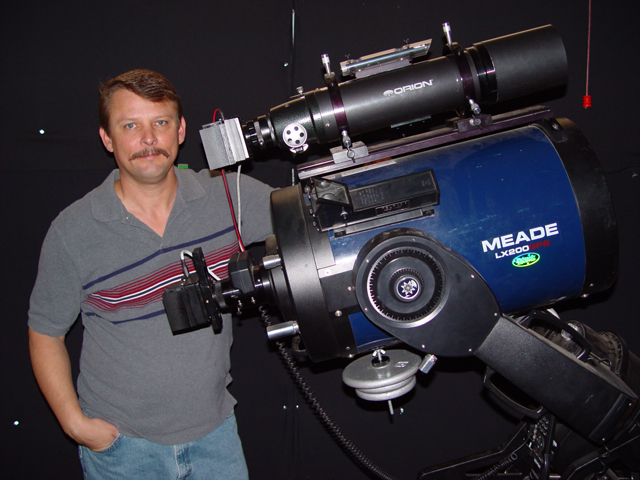
Matt Taylor, Palmdale California. DSI Pro and DSI both with Outback Coolers fitted. Meade LX-200 GPS with piggy backed Orion ED80.
hstmatt@sbcglobal.net
http://www.pbase.com/mataylor/image
Matt has a number of other images on this web site.
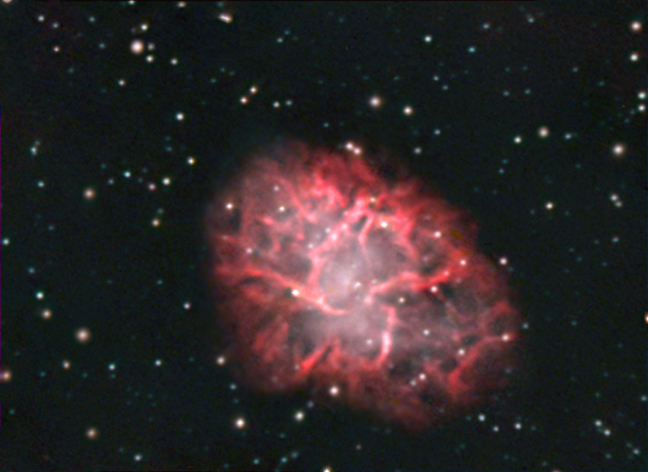
Matt Taylor, Palmdale California image of M01
Imaging Scope: Meade 12" LX200GPS/SMT/UHTC @ F/3.52 1074mm
Guiding Scope: Orion 80ED @ F/7.5 600mm
Imaging Camera: Meade DSI & DSI Pro - Guiding Camera: SBIG ST2000XM
DSI Exposures: 10 x 8 Minutes Each AutoDark Subtracted
DSI Pro Exposures: 5 x 8 Minutes Each W/ CS H-Alpha Filter
Calibration Exposures: 5 Autodarks, 10 Flats, 10 Darks for Flats
Processing: Photoshop CS for Levels & Curves, Neatimage at 20%
Chuck Reese
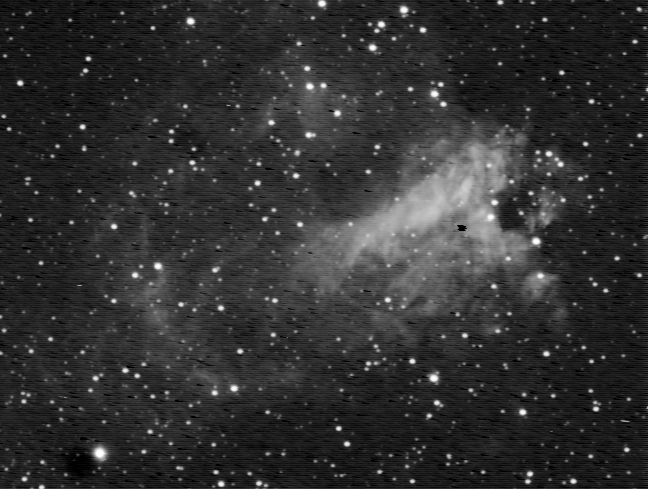
Image by Chuck Reese of M17 that's uncooled and shows the tiny dot problem, that side by side with Matt Taylor's cooled M01 shows the dramatic impact of the cooler's ability to reducer noise in the final image.
Chucks image was taken with his 10" LX200GPS @ F/3.3 using the uncooled DSI Pro, guided by the piggy backed Orion 80ED using the color DSI. He shot 5 darks and allowed the software to autodark subtract during capture. His photo is the autostacked image from the DSI's Envisage software.
Explanation by Matt Taylor:
Chuck has helped me a allot in evaluating the DSI's thermal limitations uncooled. Through his testing he has learned that the DSI Pro is + or - 3 degrees F sensitive. By this I mean that while imaging with the DSI Pro if the temp should rise or fall by 3 degrees the user should stop and reshoot darks before proceeding with the light exposures for best results. As you can imagine, if that were the case for my photo as detailed above, it would not exist. The Outback Coolers made my photo possible.
I do not know for sure that every DSI Pro owner gets the same results as Chuck when the camera is uncooled, but he lives in the Northeast, I live in the Southwest desert, and my results uncooled were like his unless I stopped and shot the new darks every 3 degrees. And I also think this is a big contributing factor to the lack of of DSI Pro photos in general. I was at the Meade factory yesterday and over heard some sales figures for both cameras, so I know the lack of Pro photos being posted to the Yahoo groups is not due to lack of sales.
The color DSI, while it does not seem to have this same thermal limitation, benefits by producing less noise overall and of course the results are outstanding!
Robert, you may want to contact Matt for further explanation of the "tiny dot" problem. apparently this is a reasonable common
Below are two images from Tom King.
btking@swbell.net
http://www.wataugaskies.com/index.php
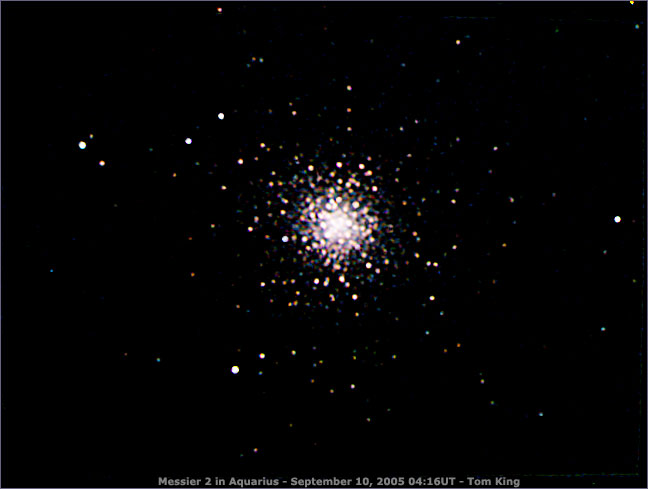
Messier 2, Globular Cluster in Aquarius
First light for the Outback Cooler with the DSI Color imager. Images and darks captured at 68°F/20°C, regulated by the Outback Cooler. Ambient temperature was 93°F/34°C.
Noise in the individual exposures was almost negligible and none of the usual internally generated gradients seen in unprocessed DSI images were present. For the first time this summer, noise in the blue color channel was virtually non-existant, and did not have to be dealt with.
Equipment: Meade LX90 203mm SCT @f/3.0 in Alt/Az, Meade Deep Sky Imager with Outback Cooler regulated at 68°F/34°C
Settings: 16 x 21.2s, gain=100, offset=50, saved as Fits Raw
Processing: De-rotation and rgb color set in AS-IP. Debayered and Color split in Fitz (thanks Hillary!). Final processing of curves, color balancing and unsharp masking in Photoshop CS. Imported to Photoshop CS with Fits Liberator
Globular clusters have always been difficult objects for me to render in presentable form. I have never really been able to determine why this is so. As a result, most all my attempts to image clusters have ended up in the binary trash can! Although not perfect, this M2 captured with the DSI Color running the Outback Cooler is in a class of it's own compared to earlier attempts. Below is my best previous attempt at M2 with the DSI Color.
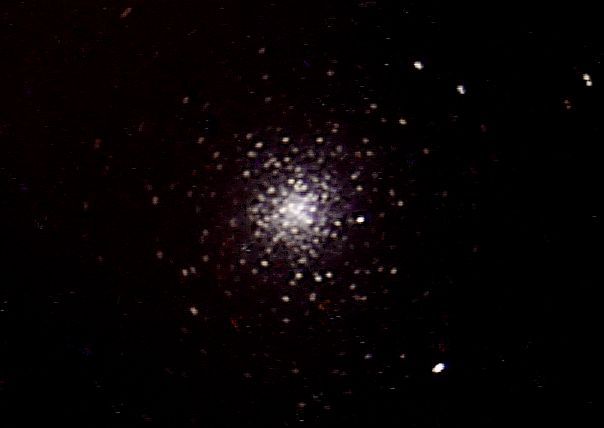
Tom King image of M02 one year prior to the image above.
Obviously there are more factors than just the Outback Cooler combining to make such a difference in a year. It is all part of the learning process I guess.